
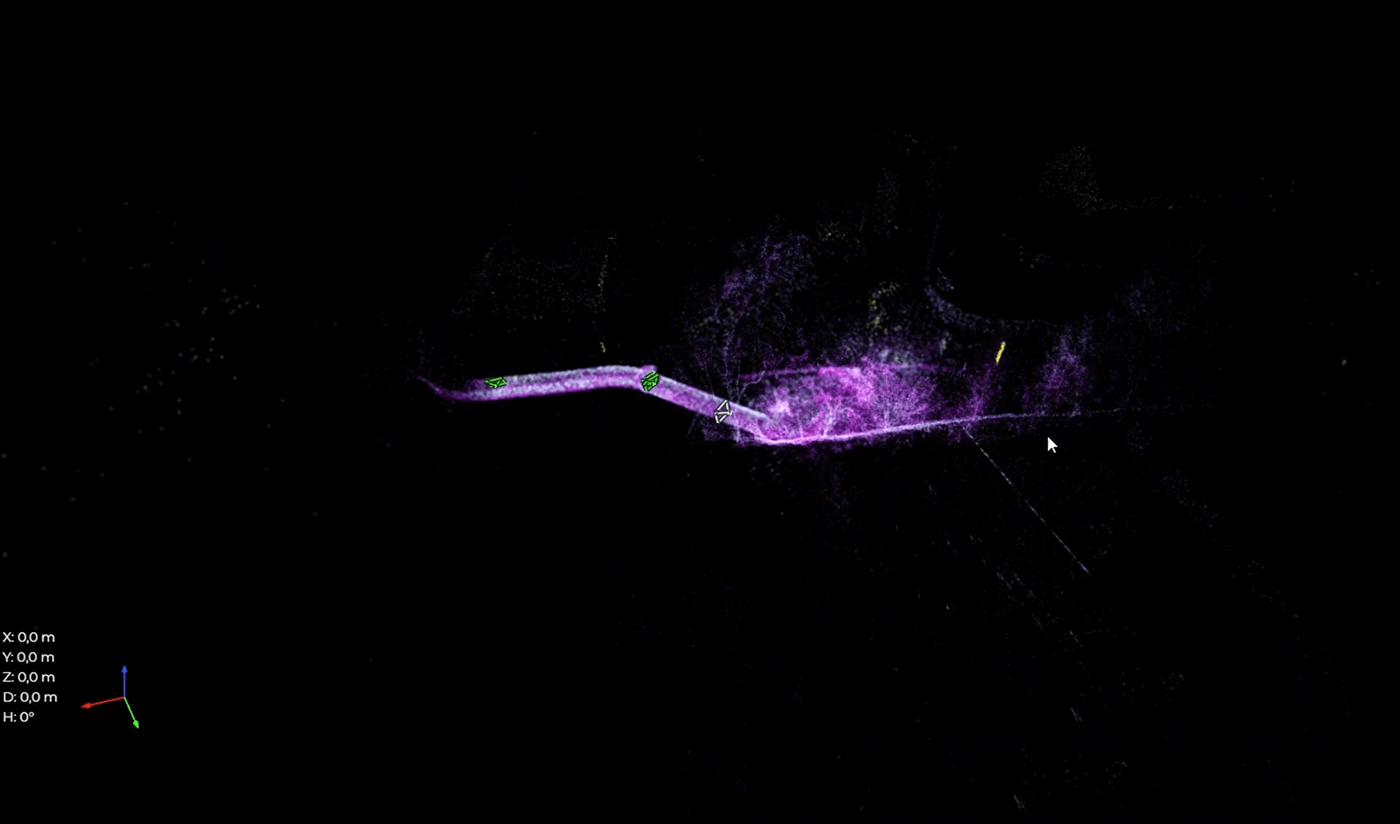
Software-supported analysis of inspection data
The image and LiDAR data captured during the drone inspection is digitally processed and prepared for technical evaluation. This allows damage, anomalies, deposits, deformations and geometric features to be recorded in a structured manner and documented in a comprehensible manner.
The software-supported evaluation complements Kuchler GmbH's many years of experience in the field of sewer inspection, sewer cleaning and sewer rehabilitation. It helps to efficiently view inspection data, mark relevant findings and prepare the results for condition assessment, planning and reporting.
The final assessment is carried out on a project-specific basis and can be based on relevant regulations such as DIN EN 13508-2 and DIN 1986-30.
Typical areas of application
The digital evaluation supports the structured recording and documentation of different damage patterns and anomalies in suitable sewers, shafts, culverts and special structures.
<pHow your project works
From data collection to structured evaluation, you receive a comprehensible basis for documentation, evaluation and further planning.</p
FAQs
What does the software-supported analysis of LiDAR point clouds and image data involve in sewer inspection?
The software-supported analysis includes the digital processing of LiDAR point clouds and high-resolution image data from drone inspections. The aim is to record damage, anomalies, deposits, deformations and geometric features in a structured manner. The data is prepared in such a way that comprehensible documentation and technical evaluation is possible. This creates a reliable basis for condition assessment, reporting and further planning. The evaluation helps to efficiently view relevant findings and prepare them for specific projects.
What damage and anomalies can be detected with the digital evaluation of sewer inspection data?
With the digital evaluation, different damage patterns and anomalies in suitable sewers, shafts, culverts and special structures can be recorded in a structured manner. These include deposits, deformations and geometric features that become visible in the image and 3D data. The software-supported analysis helps to mark relevant findings in a targeted manner and document them in a comprehensible manner. In this way, inspection data is clearly prepared and made usable for technical evaluation. The final assessment is always carried out on a project-specific basis and, if necessary, is based on relevant regulations.
How does software-supported analysis support condition assessment and reporting in the sewer sector?
The software-supported analysis creates a structured basis for assessing the condition of inspected sewer structures. Captured image and LiDAR data is digitally processed so that damage and anomalies can be documented in a comprehensible manner. This makes it easier to review the data and prepare relevant findings for reports. On this basis, results can be clearly compiled for documentation, evaluation and further planning. This creates a reliable and transparent basis for project-related decisions.
Which sets of rules can be used to evaluate LiDAR and image data in the sewer?
The final evaluation of the analyzed data can be based on relevant regulations such as DIN EN 13508-2 and DIN 1986-30. This orientation supports a comprehensible and technically sound classification of the recorded findings. It is important that the software-supported analysis prepares the data in a structured manner and makes it usable for the assessment. The actual assessment depends on the requirements of the respective project. This allows documentation and reporting to be based on suitable technical and normative specifications.
How does a project for the software-supported analysis of drone, image and LiDAR data work?
A project begins with an examination of the existing data and clarification of the requirements for documentation, evaluation and output formats. The image and LiDAR data captured during the drone inspection is then digitally processed and prepared for technical evaluation. In the analysis, damage, anomalies and geometric features are recorded and documented in a structured manner. The results are processed in such a way that they can be used for condition assessment, planning and reporting. On request, a project-related offer can be prepared, also as a fixed price offer and with an on-site appointment.
Why Kuchler Geomatics software-supported analysis of LiDAR point clouds and image data?
Kuchler Geomatics combines software-supported data evaluation with Kuchler GmbH's many years of experience in sewer inspection, sewer cleaning and sewer rehabilitation. As a result, image and LiDAR data is not only digitally processed, but also made usable in a practical way for technical evaluation. The company supports its customers in efficiently viewing inspection data, marking relevant findings and documenting them in a comprehensible manner. From data collection to structured evaluation, clients receive a reliable basis for assessment, reporting and further planning. This is complemented by rapid feedback within 24 hours, project-related quotations and, on request, an on-site appointment.
Talk to us about your inspection and evaluation task
We check the existing data, clarify the requirements for documentation, evaluation and output formats and prepare a project-related offer on request.
Response within 24 hours - Fixed price offer possible - On-site appointment on request