
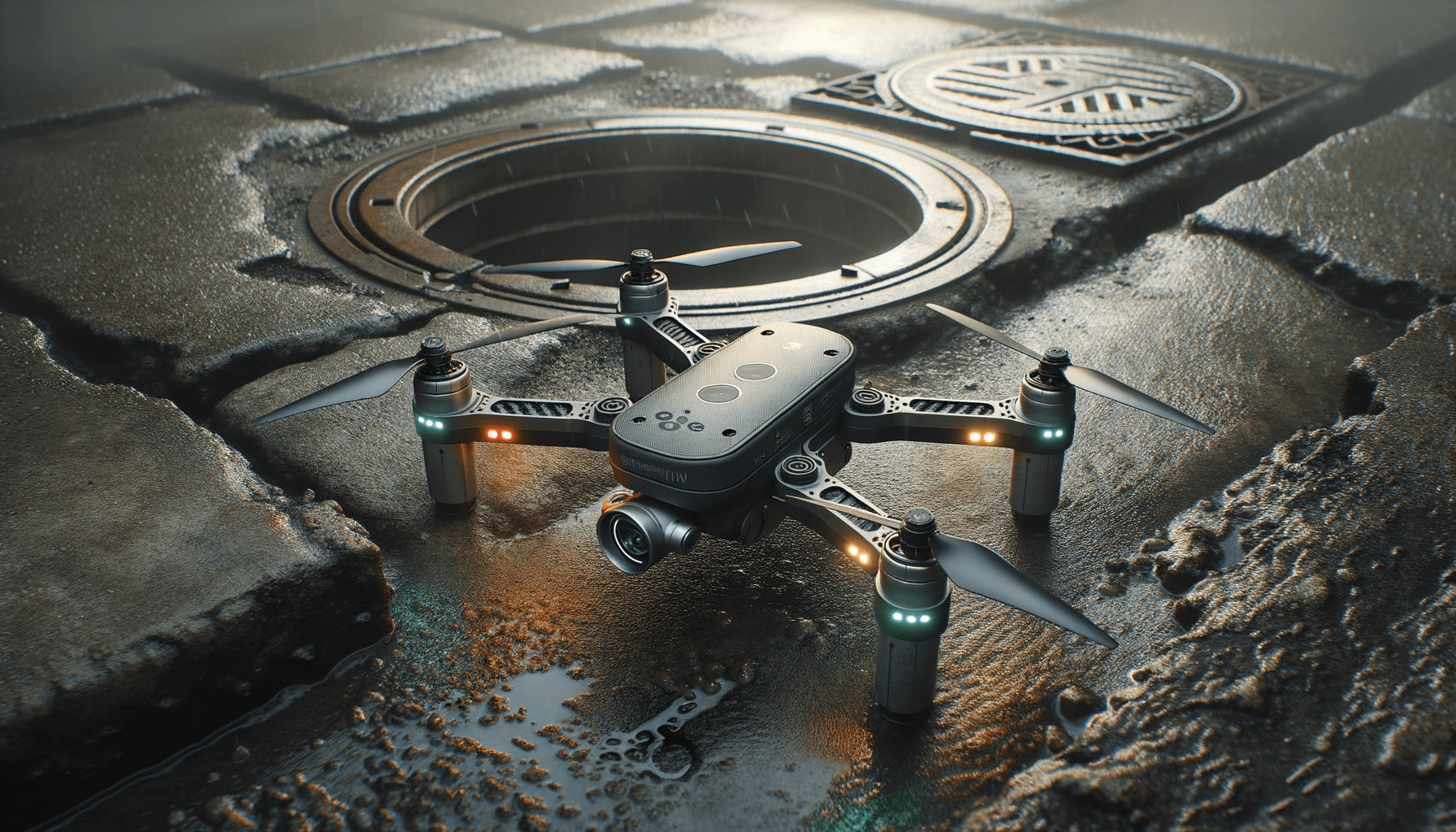
High-resolution Flyability Elios 3
With the optional Surveying Payload of the Flyability Elios 3, high-density LiDAR point clouds with up to 1.3 million data points per second can be captured. In addition, high-resolution 4K image data provides a visual basis for inspecting and documenting areas that are difficult to access.
During operation, a 3D live map supports orientation on site. The captured data can then be processed into point clouds, profiles and 3D models for further use in documentation, assessment and planning.
Wide range of applications for our UAV systems
Our drone solutions are indispensable in numerous industries.
How your project works
Our proven process ensures the success of your project.</p
FAQs
What is LiDAR 3D acquisition with a drone and what data is generated?
LiDAR 3D surveying with a drone involves the contactless recording of high-density measurement data from areas that are difficult to access. With the optional Surveying Payload of the Flyability Elios 3, up to 1.3 million data points per second can be captured. This LiDAR data is combined with high-resolution 4K 360° image data to create a precise and visually comprehensible data basis. During the operation, a 3D live map supports orientation directly on site. The recorded information can then be processed into point clouds, profiles and 3D models for documentation, evaluation and planning.
What are the advantages of LiDAR 3D detection in areas that are difficult to access?
LiDAR 3D capture is particularly suitable for areas that are difficult or costly to access. By using drones, geometries and structures can be captured efficiently without the need for time-consuming manual measurements. The combination of LiDAR REV7 and 4K 360° cameras provides both precise measurement data and a visual basis for the inspection. This facilitates documentation and improves the traceability of the results. At the same time, the data can be used directly for further assessments and planning.
How precise are LiDAR point clouds and 3D models from the Flyability Elios 3?
With the Flyability Elios 3 and the optional Surveying Payload, high-density LiDAR point clouds with very high data depth can be generated. The acquisition of up to 1.3 million measuring points per second creates a reliable basis for detailed 3D evaluations. This data can be used to create 3D mesh models in real time and later point clouds, profiles and other 3D models. Supplementary 4K image data supports the visual classification of the measured structures. This creates a precise data basis for documentation, evaluation and planning.
What can LiDAR data, profiles and 3D models be used for after acquisition?
The LiDAR data prepared after use can be further processed in various formats. These include point clouds, profiles and 3D models, which are suitable for technical documentation and structured evaluation. These data sets also provide a reliable basis for planning further measures. The additional visual documentation with 4K 360° cameras makes it easier to understand anomalies. This makes LiDAR 3D recording an important tool for analysis, decision-making and project preparation.
How does a LiDAR 3D acquisition project with Kuchler Geomatics work?
At Kuchler Geomatics, a LiDAR 3D acquisition project follows a tried-and-tested process that is geared towards reliable and efficient implementation. Right from the start, a response is possible within 24 hours, and a fixed price quotation can be provided on request. If required, an on-site appointment can also be arranged in order to precisely coordinate the requirements of the project. During the assignment, a 3D live map supports orientation and data acquisition on site. The recorded data is then processed into usable point clouds, profiles and 3D models.
Why Kuchler Geomatics LiDAR 3D acquisition?
Kuchler Geomatics combines modern drone technology with a clearly structured and proven project process. Powerful systems such as the Flyability Elios 3 with LiDAR REV7 and 4K 360° cameras are used for LiDAR 3D acquisition. This produces high-density measurement data and visual information that can be optimally used for documentation, evaluation and planning. Customers also benefit from rapid feedback within 24 hours, a possible fixed price offer and an on-site appointment on request. This provides clients with a reliable, practical and efficiently implemented solution for demanding 3D capture tasks.
Answer within 24 h,Fixed price offer possible,On-site appointment on request